Pick your region to see distances.Pick your region — and every listing will show how far it is.
Breed: Hissar
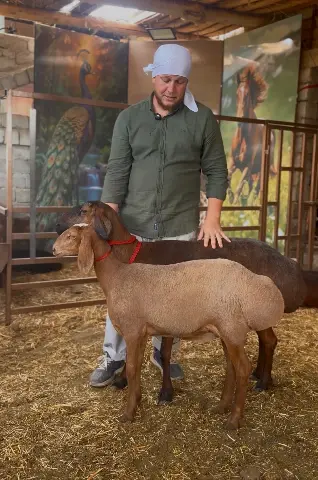
Sheep, Hissar breed
3 listings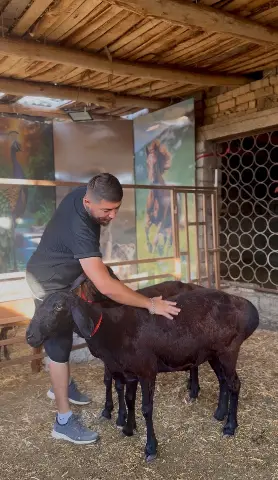

About this section
The Gissar is the largest fat-tailed sheep breed of Central Asia, developed in the Gissar valley. A mature ram usually weighs 120 to 140 kg and a ewe 80 to 90 kg, with 15 to 25 kg of fat stored in the tail. It is a meat and fat breed: the fleece is coarse and goes into felt at best, so nobody keeps Gissars for wool. Lambs grow fast and reach market condition by the autumn of their first year, which is why the breed is bought both for feeding out and for breeding. The flock copes with distant pasture and long walking routes, but it needs room, and on a cramped yard the breed never shows its weight. Listings carry the weight from the last weighing, the age and the origin, and sellers of pedigree stock describe the line separately. A ewe normally raises a single lamb, so the flock grows slower than a prolific breed.
How heavy is a Gissar ram?
A mature ram is usually 120 to 140 kg and a ewe 80 to 90 kg. Yearlings on good grazing come close to 70 to 90 kg. Every listing carries the weight of that particular animal, and weight also works as a filter.
What should a buyer check before travelling to view an animal?
The weight from the last weighing, the age, the record of vaccinations and parasite treatments, and photographs of the whole animal including the legs. Under this weight the hooves and legs are the first things to fail.
Is Gissar wool worth selling?
Hardly. The fleece is coarse and ends up as felt rather than a saleable clip, and shearing is done mainly to keep the animal clean. Income from the breed comes from meat and tail fat.
How does the Gissar differ from the Edilbay?
The Gissar is heavier and carries more fat in the tail, while the Edilbay handles sparse steppe grazing and long drives better. The choice comes down to maximum weight against low cost of keeping.